This Kaspa testnet roundup covers a June 2025 wave of ecosystem experiments, including the Kasplex public testnet, Zealous Swap deployments, Kaspa Finance onboarding, and Igra developer access. These were separate third-party projects at different maturity levels, so participation offered useful testing evidence but did not equal a security endorsement or production launch.
Key takeaways
- Kasplex invited public users to deploy contracts, test applications, and report bugs on its Layer 2 environment.
- Zealous Swap exposed automated-market-maker interfaces on development networks.
- Kaspa Finance sought testers for an early Kasplex-based application.
- Igra was onboarding developer teams to a more limited devnet program.
- Testnet tokens have no mainnet value, and testers should use isolated wallets and verify every official link.
What was the June 2025 Kaspa testnet wave?
KASmedia’s June ecosystem report described several projects opening or expanding test environments around the same period. They shared an association with the wider Kaspa ecosystem, but they were not one network and did not carry identical trust assumptions.
The distinction between testnet and mainnet is essential. A testnet is a controlled place to expose software to users, collect logs, reproduce failures, and revise designs. A public interface can look polished while contracts, bridges, sequencers, indexers, or economic parameters remain experimental.
What was Kasplex testing?
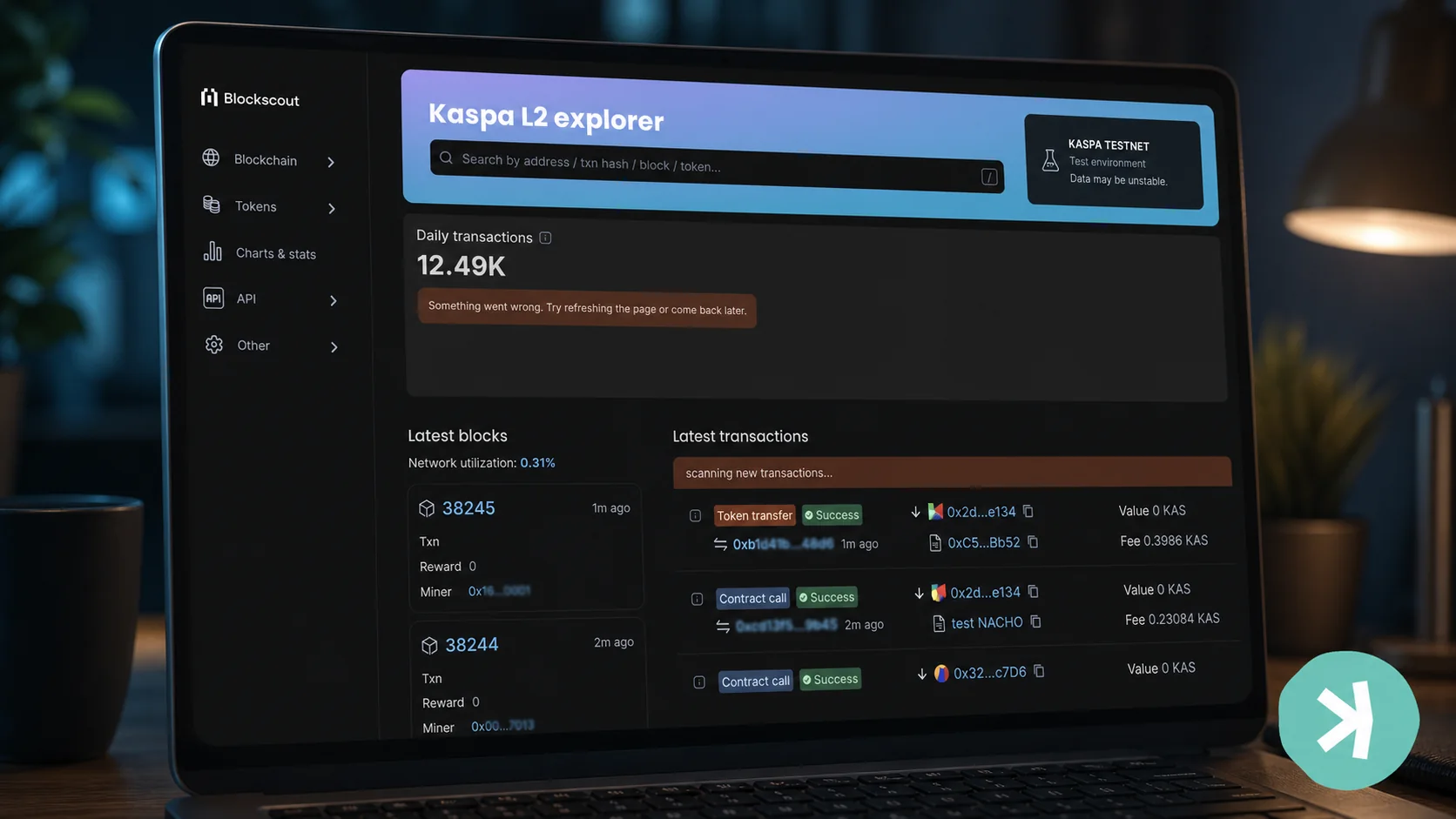
Kasplex invited broader participation in a public testnet focused on smart contracts and decentralized applications. The report described it as an EVM-compatible Layer 2 using zero-knowledge proofs and Kaspa Layer 1 for ordering or data-related functions. It also linked a faucet offering test assets without authentication.
For builders, the useful tests included contract deployment, wallet connection, RPC reliability, fee behavior, indexing, and recovery from failures. For project maintainers, bug reports become more valuable when they contain a transaction hash, network identifier, wallet version, browser or client version, timestamp, and reproducible steps.
Architectural claims such as “based rollup” should be checked against current technical documentation. A weekly news summary captures what a project announced at that time; it does not replace code, bridge specifications, proof-system documentation, or an independent audit.
What were Zealous Swap and Kaspa Finance testing?
Zealous Swap presented automated-market-maker functionality on Kasplex and Igra development environments. An AMM replaces a conventional order book with smart contracts and liquidity pools. Testing such a system involves more than making one swap: teams need to examine slippage, token metadata, transaction failure, allowance handling, rounding, pool accounting, and the interface’s response to chain reorganization or RPC interruption.
Kaspa Finance was a newer initiative seeking users through an onboarding process. The source report explicitly paired enthusiasm with caution because the project was early. That remains the right posture. A testnet form or social account is evidence of an experiment, not proof that contracts are safe, a team is durable, or any future token has value.
Never reuse a high-value mainnet seed phrase in a new test application. Create an isolated test wallet and assume every third-party interface can fail.
How did Igra’s developer access differ?
Igra’s program was described as a developer devnet with dozens of builders across projects such as analytics, bridges, stablecoins, and derivatives. A limited devnet is often optimized for collaboration and rapid iteration rather than open public reliability. Access may change, the chain may reset, and application state may disappear without the continuity expected from production infrastructure.
That environment can still produce strong engineering evidence. Developers can measure RPC behavior, establish deployment workflows, validate cross-layer assumptions, and identify missing documentation. The later Igra Caravel testnet guide follows how this track evolved in July.
What evidence should a testnet participant collect?
Useful testing is structured. Record the project name, exact network, chain identifier, client build, contract address, operation attempted, expected result, actual result, and whether the issue reproduces. Remove private keys, seed phrases, access tokens, email addresses, and IP details before sharing logs publicly.
Separate application behavior from base-layer behavior. A failed swap might come from a frontend, wallet, RPC service, Layer 2 node, smart contract, bridge, or Layer 1 submission path. Naming the failing component prevents a third-party bug from being incorrectly described as a Kaspa consensus problem.
What were the main user risks?
The most common risks were phishing, wallet confusion, misleading token value, and immature contracts. Search ads and copied social profiles can direct users to false faucets. A legitimate testnet asset is not an investment and should not require sending mainnet KAS to “unlock” it.
Use links from the project’s official repository or verified communication channel, inspect the wallet’s requested permissions, and revoke unneeded approvals. If the test requires installing software, verify the publisher, release hash, and source code where available.
Why did this activity matter for Kaspa builders?
The collection showed demand for smart-contract, exchange, wallet, and developer tooling around Kaspa. More importantly, it exposed integration assumptions to real users. A testnet’s success should be measured through resolved bugs, clearer documentation, reproducible benchmarks, and safer releases—not simply by participant counts or social engagement.
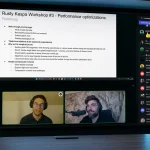
The same learning culture appeared in Rusty Kaspa Workshop #3, which helped proficient developers navigate the Layer 1 codebase. Ecosystem applications and core infrastructure advance through different workflows, but both benefit from public evidence and precise reporting.
Frequently asked questions
Are Kaspa testnet tokens worth money?
No. Testnet assets are for software testing and should not be marketed as having mainnet monetary value.
Did Kaspa Core operate every project in this roundup?
No. The roundup discussed independent ecosystem projects. Each needs its own technical and security assessment.
Is a public testnet the same as an audit?
No. Public testing can find bugs, but it does not replace expert code review, formal analysis where appropriate, or independent security audits.
Source and verification note
The primary source is KASmedia’s June 2025 report, The Weekly Knight: So Many Testnets! We are Inevitable!. It documented contemporaneous announcements and linked project channels. Project status, URLs, and contract addresses can change, so readers should re-verify current official documentation before interacting.